
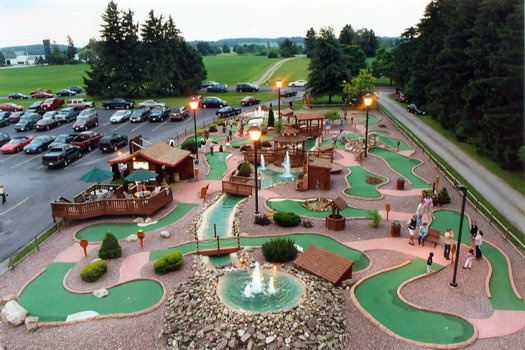
Mini Golf Isn’t Just for Kids Anymore – It is Evolving Fast!
The world of mini golf continues to transform. Once largely viewed as a kids’ attraction, mini golf is now emerging as a full-fledged entertainment option for families, friends, couples, and even corporate groups. The broader Family Entertainment Center (FEC) Market — which often includes mini-golf, arcades, go-karts, and other leisure offerings – is expected to grow significantly in the coming decade. Future Market Insights
Meanwhile, the global Mini Golf Market remains on an upward trajectory: as of 2024 it was valued around USD 1.4 – 1.6 billion, and forecasts expect continued growth from 2025 through the 2030s. Growth Market Reports
All this points to a simple truth: mini golf is no longer a casual weekend activity – it’s becoming a core pillar of modern, diversified entertainment ecosystems.
2026 Trends Shaping Mini-Golf & Family Entertainment
Indoor, Climate-Controlled & Weather-Proof Formats Are Gaining Ground
Outdoor seasonal mini-golf is still popular — but more operators are embracing indoor or hybrid setups. In regions with unpredictable weather, urban-based centers, or mixed-use entertainment venues, indoor mini golf allows operators to guarantee business year-round. Greenspan
Additionally, themes like glow-in-the-dark, neon, or black-light courses — often combined with ambient music, creative lighting, and immersive design — are gaining popularity. These formats attract not just families, but teens and young adults looking for night-out vibes. Accio
Mini Golf + “Social Entertainment” = New Target Audiences
Mini golf is shedding its “kid-only” stigma. Many modern venues now double as social hubs, blending mini golf with food, drinks, music, and nightlife — appealing to adults, couples, friends, and groups. The rise of this trend reflects changing consumer preferences: social, relaxed, affordable entertainment rather than expensive or time-heavy outings. blooloop
This shift means the typical mini-golf “customer” has broadened: it’s not just families and kids — it’s date nights, friend groups, corporate team events, and casual night-outs.
Portable, Modular & Customizable Course Kits Are Trending (Great for Builders)
One of the biggest shifts for builders and operators is moving toward modular, portable mini-golf solutions. These are attractive because they:
reduce upfront construction costs
can be relocated or reconfigured for different events/seasons
make maintenance and updates easier
allow for pop-ups, rentals, or flexible business models
This trend favors companies who are designing with modularity, creativity, and ease-of-assembly in mind. Accio
Rising Demand from Family-Entertainment Venues, Resorts & Mixed-Use Complexes
Mini golf is increasingly being integrated into larger entertainment offerings — from arcade-based family fun centers to resorts, malls, and mixed-use entertainment parks. For venues looking to maximize foot traffic and dwell time, mini golf offers a low-cost, high-engagement draw that appeals broadly across age groups. MarketIntelo
This integration trend makes mini-golf a compelling option for developers, property owners, and entertainment entrepreneurs.
Economic & Lifestyle Shifts Support Continued Growth
As consumer preferences shift toward experiences over material goods, low-cost, high-fun leisure like mini golf is becoming more attractive. Mini golf is affordable, social, and easy to scale — making it perfect for families, young professionals, and budget-conscious consumers alike. Dataintelo
Additionally, with increasing interest in wellness, socialization, and casual recreation, mini golf offers a light-activity, socially-driven alternative to more intense sports — broadening its appeal across demographics. Growth Market Reports
Where the Industry Is Headed: 2026 & Beyond 🔮
Expect more hybrid entertainment centers combining mini golf with VR/arcades, social spaces, music, food — blurring the line between amusement park and social club.
Modular/portable mini golf likely to gain traction, as developers seek low-cost, low-commitment entertainment assets, especially in urban areas or mixed-use properties.
Demand for themed & immersive experiences — not just “holes,” but environments: glow-in-the-dark, narrative drives, social-media–ready aesthetics, maybe even augmented-reality integrations.
Operators will aim for repeatability and social engagement (nighttime play, events, group bundles, memberships, loyalty) rather than one-off outings.
Bottom Line
Mini golf is no longer a simple throwback; it’s evolving fast. In 2026, it sits at the intersection of social entertainment, flexible business models, and scalable design — making it ideal for modular builders, entrepreneurs, and operators who can adapt.